
The buy and hold strategy has been preached as gospel in financial circles for decades. Millions of investors have been told to simply purchase quality assets and ignore market fluctuations. Yet the question remains: does this approach still deliver the wealth-building outcomes ambitious investors need in 2026?
Understanding the Buy and Hold Philosophy
The fundamental premise behind buy and hold is elegantly simple. Investors purchase stocks, bonds, or other securities with the intention of holding them for extended periods, often decades, regardless of market volatility. This approach assumes that over long timeframes, quality investments will appreciate and deliver superior returns compared to frequent trading.
Buy and hold investing emerged as a dominant strategy during the latter half of the 20th century, championed by legendary investors who demonstrated its potential. The philosophy rests on several core assumptions:
- Markets trend upward over time despite short-term fluctuations
- Transaction costs and taxes erode returns from frequent trading
- Timing the market consistently is nearly impossible
- Quality companies compound wealth through reinvested earnings
- Emotional discipline beats tactical maneuvering
The Warren Buffett Example
About the author

Tomas Vyšniauskas is a professional trader and founder of Sovereign Prosperity.
Trading full-time since 2021, he manages capital with a focus on disciplined growth and controlled downside.
His work is built around a simple goal: helping people make their existing capital work harder without sacrificing the freedom that wealth is supposed to create.
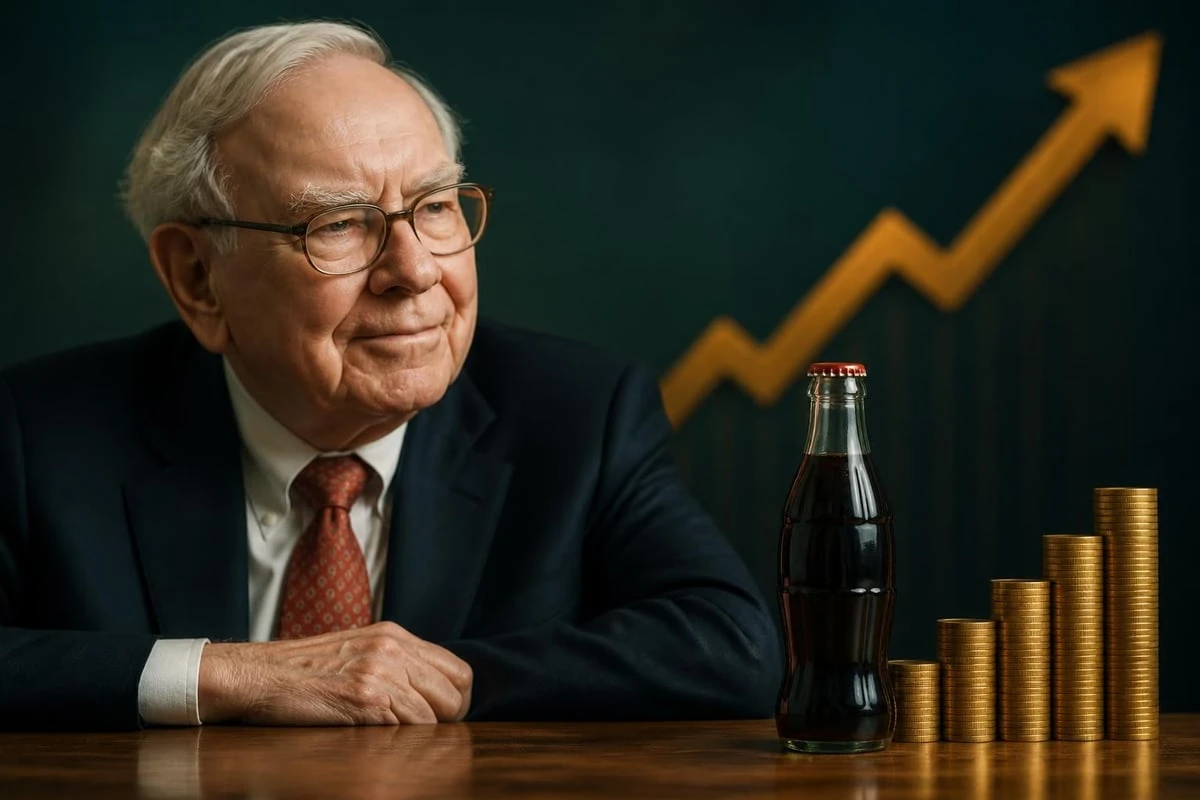
Warren Buffett stands as the most famous proponent of buy and hold investing. His stake in Coca-Cola, purchased primarily in 1988, exemplifies the strategy's potential. Berkshire Hathaway invested approximately $1.3 billion in Coca-Cola shares and has held them for over three decades. By 2026, that position has generated billions in dividends alone, demonstrating how patience with quality businesses can compound wealth.
Buffett's approach contains nuances often overlooked. He doesn't simply buy and forget. Berkshire Hathaway conducts rigorous analysis before purchasing, focuses on businesses with durable competitive advantages, and maintains the flexibility to sell when fundamentals deteriorate. His famous quote, "Our favorite holding period is forever," comes with the unstated caveat: forever for the right businesses at the right price.
The Mathematics Behind Long-Term Holding
Numbers tell a compelling story about extended holding periods. Between 1926 and 2025, the S&P 500 delivered approximately 10% annualized returns. A $10,000 investment held for 30 years at this rate would grow to over $174,000, assuming dividend reinvestment.
| Holding Period | Probability of Positive Returns (S&P 500) | Average Annual Return |
|---|---|---|
| 1 Year | 73% | 10.2% |
| 5 Years | 88% | 9.8% |
| 10 Years | 94% | 10.1% |
| 20 Years | 100% | 9.9% |
The data reveals how time reduces volatility risk. Over any 20-year period since 1926, the S&P 500 has never produced negative returns. This statistical reality forms the foundation of buy and hold advocacy.
However, these averages mask critical details. The sequence of returns matters enormously, particularly for investors nearing retirement or requiring capital access. Understanding why playing it safe can sometimes leave you vulnerable requires examining what average returns hide about individual investor experiences.
The Inflation Challenge
Buy and hold strategies must contend with a persistent adversary: inflation. Nominal returns of 10% annually become far less impressive when inflation averages 3-4% over the same period. Real returns, the only returns that matter for purchasing power, tell a different story than headlines suggest.
Between 2000 and 2013, the S&P 500 delivered essentially zero nominal returns. Factoring in inflation, investors experienced substantial real losses despite "holding through" two major market crashes. Inflation functions as an invisible tax that buy and hold investors cannot ignore.
When Buy and Hold Works Best
The strategy delivers optimal results under specific conditions. Identifying these circumstances separates successful long-term investors from those who simply hope for market appreciation.
Quality business selection represents the critical variable. Peter Lynch, who managed Fidelity's Magellan Fund from 1977 to 1990, achieved a 29% annual return through disciplined stock selection combined with patient holding. Lynch famously stated, "The best stock to buy is the one you already own," emphasizing the value of knowing your investments deeply.
His approach involved:
- Thorough fundamental analysis before purchasing
- Continuous monitoring of business performance
- Conviction to hold through temporary setbacks
- Willingness to add to positions when prices dropped
- Selling only when the investment thesis broke
Tax Efficiency Advantages
Long-term capital gains tax treatment provides genuine benefits for buy and hold investors. In the United States, assets held longer than one year qualify for preferential tax rates, currently maxing at 20% for high earners compared to ordinary income rates reaching 37%.
Consider an investor in the 37% tax bracket. Frequent trading generates short-term gains taxed at that rate, while buy and hold positions benefit from the 20% long-term rate. This 17-percentage-point difference compounds significantly over decades.
Transaction costs compound in the opposite direction. Even with commission-free trading platforms, bid-ask spreads, market impact, and opportunity costs accumulate. A portfolio turning over 100% annually faces these costs repeatedly, while buy and hold investors incur them once.
The Overlooked Risks of Passive Holding
Despite its appeal, buy and hold carries substantial risks that wealth management professionals must acknowledge. Kiplinger highlights specific dangers that become acute during retirement, when recovery time disappears.
Market timing aside, strategic rebalancing differs fundamentally from buy and forget approaches. The 2008 financial crisis demonstrated how portfolios concentrated in certain sectors could devastate wealth. Investors who bought and held financial stocks from 2006 through 2010 experienced catastrophic losses, with many positions never recovering.
| Company | Peak Price (2007) | Low Price (2009) | Recovery Status (2026) |
|---|---|---|---|
| Citigroup | $55 | $0.97 | Never recovered to peak |
| AIG | $70 | $0.33 | Never recovered to peak |
| Lehman Brothers | $67 | $0 | Bankruptcy |
| Bear Stearns | $172 | Acquired at $10 | Ceased to exist |
These examples illustrate how buy and hold without risk management can permanently destroy capital. The "hold forever" philosophy assumes businesses maintain competitive advantages indefinitely, an assumption reality regularly contradicts.
Opportunity Cost Considerations
Capital locked in underperforming positions carries real costs. Between 2000 and 2020, technology giants like Microsoft and Cisco traded sideways for over a decade while emerging companies like Amazon and Google multiplied investor capital many times over.
An investor who bought Microsoft in 2000 at $58 per share and held until 2013 experienced essentially zero returns for 13 years. Meanwhile, alternative deployments of that capital could have generated substantial wealth. Effective wealth management requires acknowledging opportunity costs, not just avoiding realized losses.
Modern Applications for Ambitious Investors
The fundamentals of buy and hold remain relevant, but 2026's investment landscape demands evolution. Successful wealth builders combine long-term thinking with active position management.
The hybrid approach recognizes valuable principles while rejecting dogma. This means:
- Holding quality businesses through normal volatility
- Regularly reassessing investment theses
- Rebalancing when allocations drift significantly
- Taking profits when valuations become excessive
- Adding to positions during irrational selloffs
Ray Dalio's All Weather Portfolio demonstrates how strategic diversification and periodic rebalancing enhance traditional buy and hold approaches. His fund, Bridgewater Associates, maintains long-term positions while actively managing risk exposure across asset classes.
Sector Rotation Within Long-Term Frameworks
Technology provides a compelling case study. An investor who bought the QQQ (Nasdaq-100 ETF) in 2000 and held through 2026 achieved positive returns, but the journey included a 83% drawdown and 15 years of recovery. Meanwhile, rotating between growth and value based on market cycles could have dramatically improved outcomes while maintaining long-term equity exposure.
This doesn't require perfect timing. Simple frameworks like valuation-based rebalancing capture much of the benefit without the stress of tactical trading.
Building Wealth Beyond Conventional Wisdom
The investment industry profits from passive investors who accept average returns. Index fund providers, robo-advisors, and traditional wealth managers promote buy and hold because it scales effortlessly and generates predictable fees regardless of performance.
Ambitious individuals seeking accelerated wealth building require different approaches. Active capital management offers serious alternatives to conventional strategies for those who value freedom, time, and growth that outpaces inflation.
Professional management doesn't mean constant trading. It means applying disciplined frameworks that capture market opportunities while managing downside risk. The difference between 7% and 12% annual returns compounds into millions over investment lifetimes.
| Strategy | 30-Year Growth of $100,000 | After 3% Inflation |
|---|---|---|
| Passive Index (7%) | $761,226 | $313,139 |
| Active Management (12%) | $2,995,992 | $1,232,515 |
| Difference | $2,234,766 | $919,376 |
These numbers illustrate why accepting conventional wisdom carries enormous opportunity costs. High net worth financial planning recognizes that wealth preservation differs fundamentally from wealth acceleration.
The Buffett Paradox
Warren Buffett famously recommends index funds for most investors while personally practicing concentrated stock selection with active oversight. This paradox reveals an important truth: buy and hold works differently depending on investor sophistication, capital base, and time commitment.
Buffett's recommendation for passive indexing applies to those unwilling or unable to conduct thorough analysis. His personal approach demonstrates that superior returns require superior effort. The middle ground - passive holding of individual stocks without ongoing analysis - often delivers the worst outcomes.
What Professional Management Actually Means
Top-ranked wealth management firms distinguish themselves through intelligent risk control and strategic guidance, not hyperactive trading. The goal is capturing growth opportunities while avoiding catastrophic losses that destroy compound growth.
Consider the simple math: a 50% loss requires a 100% gain just to break even. Buy and hold investors who experienced the full downturns in 2000-2002 and 2007-2009 spent years recovering before resuming wealth building. Active risk management that reduced these drawdowns even modestly would have dramatically improved long-term outcomes.

Personal Conviction Versus Market Consensus
John Templeton built his fortune by famously stating, "Bull markets are born on pessimism, grow on skepticism, mature on optimism, and die on euphoria." His approach combined long-term holding with contrarian positioning and strategic exits.
Templeton bought shares of every company trading below $1 on the New York Stock Exchange at the outbreak of World War II. He held these positions as the war economy developed, selling years later for substantial profits. This wasn't passive buy and hold, it was conviction-based investing with strategic entry and exit timing.
The lesson transcends market timing. It demonstrates how independent thinking combined with patience creates wealth. Following consensus means accepting consensus returns. Buy and hold becomes dangerous when it morphs into buy and hope, trusting that market averages will bail out poor decisions.
Implementation for Serious Wealth Builders
Successful buy and hold implementation requires frameworks that prevent it from becoming neglect. Consider these actionable principles:
- Define your investment thesis explicitly - Write down why you own each position and what would invalidate that thesis
- Set review intervals - Quarterly reassessments prevent both overtrading and neglect
- Establish rebalancing triggers - Rebalance when allocations drift beyond predetermined thresholds
- Monitor business fundamentals - Hold positions as long as the business performs, not the stock price
- Maintain capital for opportunities - Reserve dry powder for exceptional value creation moments
The difference between wealth preservation and wealth acceleration often comes down to having capital available when others face forced selling. Buy and hold everything leaves nothing for opportunistic deployment.
Risk-Adjusted Returns Matter Most
Absolute returns tell incomplete stories. A 15% annual return with 40% volatility produces worse outcomes for most investors than 12% returns with 20% volatility. Sleep quality, stress levels, and behavioral consistency all affect long-term wealth building.
Professional management frameworks incorporate risk limits that prevent catastrophic losses while capturing substantial upside. This balanced approach often outperforms pure buy and hold over full market cycles precisely because it prevents the behavioral mistakes that destroy wealth.
Buy and hold contains valuable wisdom about patience, tax efficiency, and the power of compounding, but treating it as religious doctrine rather than one tool among many limits wealth-building potential. The most successful investors combine long-term thinking with active position management and intelligent risk control. If you're seeking accelerated financial growth that outpaces inflation and builds real wealth, start a conversation with Sovereign Prosperity to explore how professional capital management can transform your investment outcomes.
About the author
Tomas Vyšniauskas is a professional trader and founder of Sovereign Prosperity.
Trading full-time since 2021, he manages capital with a focus on disciplined growth and controlled downside.
His work is built around a simple goal: helping people make their existing capital work harder without sacrificing the freedom that wealth is supposed to create.
How fast is your wealth growing?
Select your current annual growth figure:
You're leaving your wealth growth to chance. You're barely outpacing inflation and you're unlikely to grow your wealth to the next meaningful milestone. You're working for the banks but not for yourself. If you'd like to fix this, download our free report - The Silent Wealth Engine - below.
You're doing something right but you're still leaving your wealth growth to chance. You're outpacing inflation but getting the leftovers that are not inspiring. You're still unlikely to grow your wealth to the next meaningful milestone. If you'd like to fix this, download our free report - The Silent Wealth Engine - below.
Congratulations, you're doing well - better than the majority of investors. You're well above the inflation rate. You're likely to grow your wealth to the next meaningful milestone. If you'd like to learn how to maintain your current trajectory in a wiser way or even grow beyond your current limits, download our free report - The Silent Wealth Engine - below.
More from Wealth Intelligence
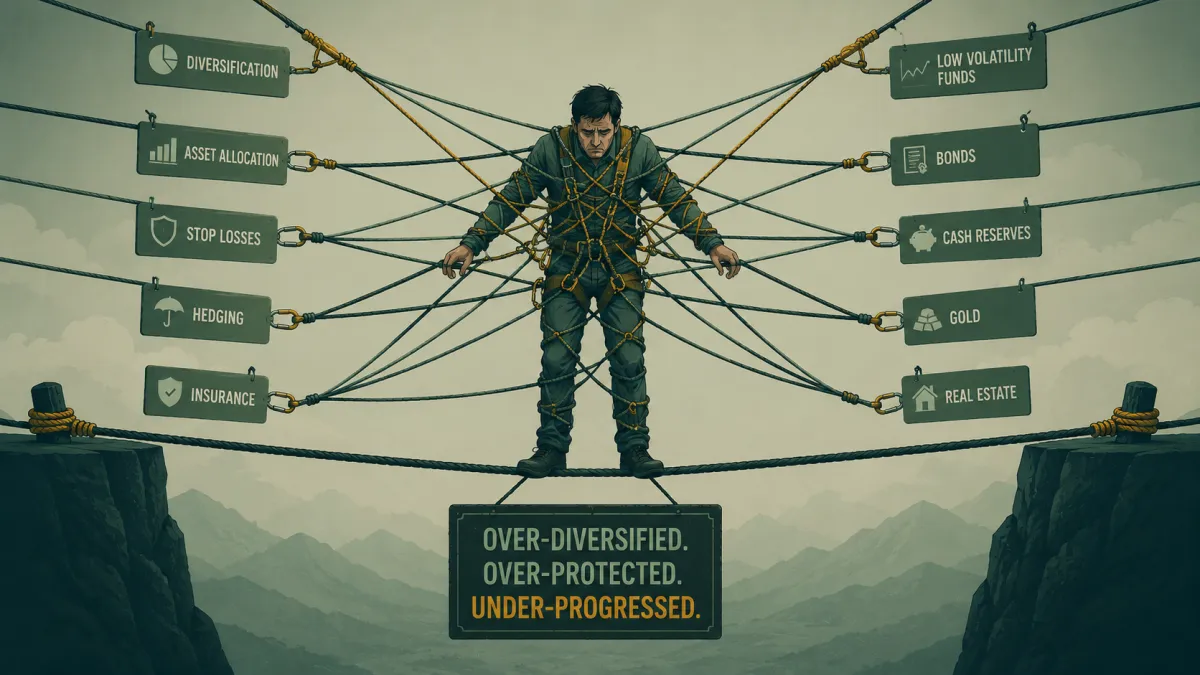
Why Diversification Has Become a Financial Religion

The European Pension Illusion: Why Retirement Security Is Far Less Certain Than People Think