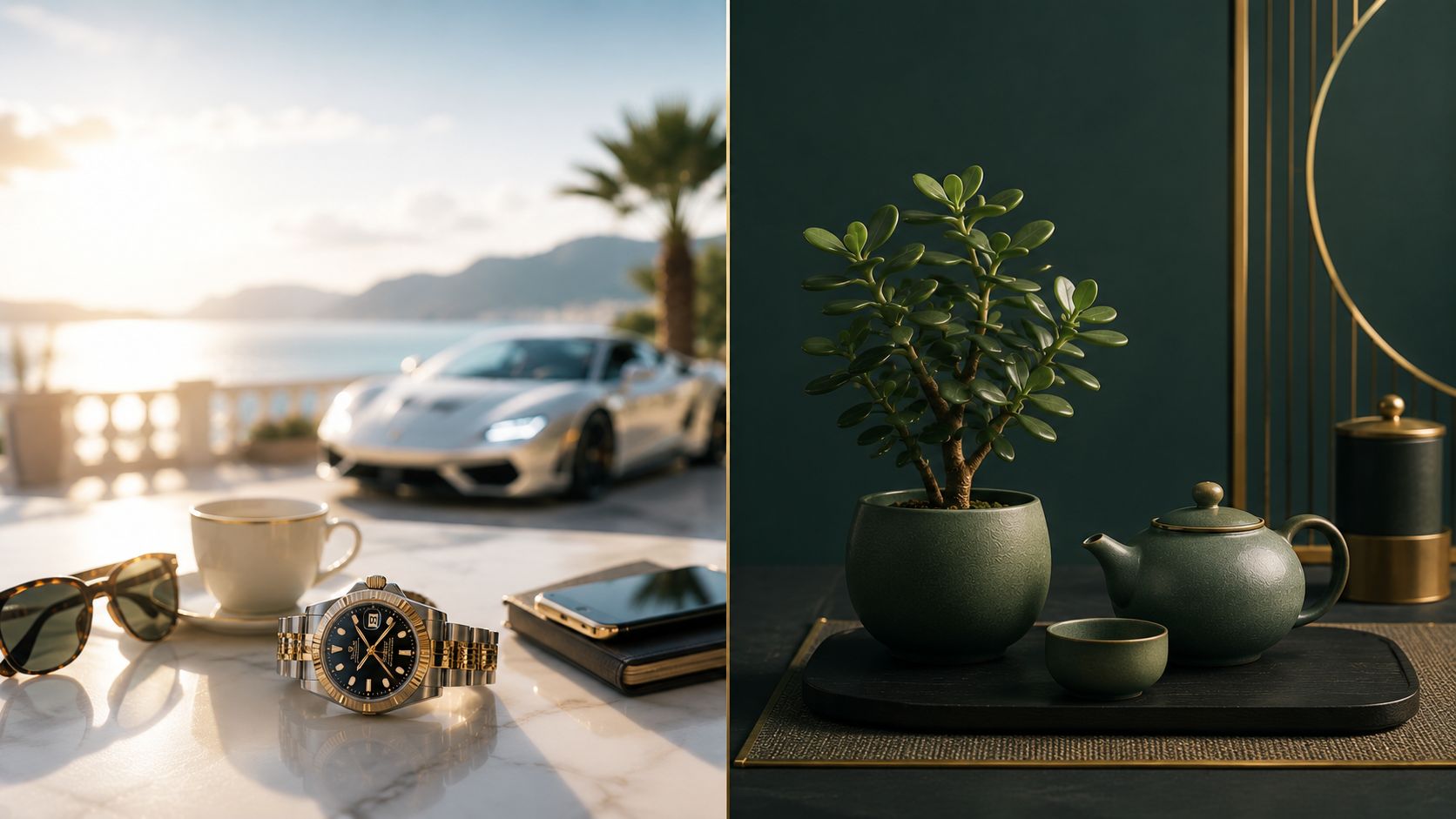
Asia has mastered one side of wealth that the West often gets wrong: discipline.
But the West has developed another idea that deserves more attention: wealth is supposed to buy freedom while you're still alive.
Here's what ambitious people on both sides can learn from each other.
In this article:
Why Asian wealth culture prioritizes accumulation over spending
Where family-first, ownership-first thinking builds real advantage
Why patience quietly outperforms speed in markets
The five principles worth combining from both cultures
What this means for how you manage your own capital
1. Respect Capital Like It Took Years to Earn
The Asian instinct: money is stored effort, not disposable income.
About the author

Tomas Vyšniauskas is a professional trader and founder of Sovereign Prosperity.
Trading full-time since 2021, he manages capital with a focus on disciplined growth and controlled downside.
His work is built around a simple goal: helping people make their existing capital work harder without sacrificing the freedom that wealth is supposed to create.
The Western instinct: a pay rise means it's time to upgrade.
The result: one group compounds quietly for decades. The other spends the raise before it even lands.
Many successful Asian families treat money with genuine respect. It isn't something to spend just because it's available - it's stored time, stored opportunity. That subtle shift changes behavior completely.
Wealthy Asian families tend to ask a different question: "How can this money create even more money?" That question compounds over decades.
Li Ka-shing is one of the clearest examples. Despite becoming one of Asia's wealthiest individuals, he built his reputation on discipline rather than extravagance. People who worked with him often said he understood the value of every dollar, because he never forgot how hard it was to earn his first ones.
Every unnecessary pound, euro, or dollar spent today is one less unit of capital working for you tomorrow.
2. Lower Ego Spending Creates Higher Freedom
Western culture often treats spending as a way to broadcast success - luxury watches, designer handbags, prestige cars, homes bigger than anyone actually needs.
None of that is inherently wrong. The trouble starts when purchases are financed by ego instead of genuine enjoyment.
I've met professionals earning impressive salaries who were quietly buried under enormous monthly commitments. From the outside, they looked wealthy. In reality, they had almost no financial flexibility.
Compare that to many affluent families across Singapore, Taiwan, or South Korea. Exceptions exist everywhere, but visible wealth often matters far less than actual wealth to this group.
Financial freedom is measured by the choices available to you, not by the logo on your jacket. Ironically, the people who stop spending to look rich are often the ones who get rich fastest.
3. Wealth Is Often Built as a Family Project
In much of the West, money is a deeply personal pursuit.
In many Asian cultures, wealth belongs to generations, not individuals.
Parents help children. Children help parents. Businesses get built together. Assets stay in the family instead of getting liquidated at the first opportunity.
That structure creates accountability. When a financial decision affects several generations at once, acting on impulse becomes a lot less tempting.
The world's richest families don't stay wealthy generation after generation because they're lucky. They stay wealthy because they think in decades, not years.
Whether you're running a business, managing a portfolio, or just handling household finances, asking "how will this look in ten years?" tends to produce very different answers than asking "how does this feel right now?"
4. Ownership Beats Consumption
Consumers trade money for a moment of satisfaction.
Owners trade money for future income.
That single distinction changes everything - and it shows up again and again among wealthy people, regardless of nationality, in how they prioritize businesses, investments, productive assets, and intellectual property.
I learned this the hard way through my own trading journey. I started learning to trade in 2010. Like most beginners, I went to broker seminars, bought courses, read books, and tested strategy after strategy. I spent eleven years consuming educational content - and after all that time, I was still standing at the starting line.
The real issue was clear in hindsight: I'd spent years consuming information instead of building real understanding. Everything changed once I got direct mentorship from a genuine professional and finally learned how markets actually work, rather than how the retail trading industry claims they work.
Wealth should remove complexity, not create it.
The same principle applies to investing. If you're a business owner, executive, or professional whose primary expertise lies somewhere else, spending hundreds of hours learning to manage capital may not be the highest-value use of your time.
Your job is to build the business. Your wealth should have its own professional system.
See how Sovereign Prosperity approaches active capital management →
5. Patience Is an Investment Advantage
Western culture celebrates speed - faster promotions, faster returns, faster growth, faster everything.
Markets don't reward that instinct. Professional investing asks for the opposite.
One of the biggest lessons from my years of trading is that doing nothing is often the highest-value move available. Waiting for genuinely strong opportunities protects both your capital and your nerves.
Patience like this tends to come naturally in cultures where it's built into broader thinking, which is part of why it shows up so often among successful Asian investors.
Warren Buffett isn't Asian, but one of his most famous lines captures the same idea: "The stock market is a device for transferring money from the impatient to the patient."
Whether you're actively trading or investing for the long haul, patience is frequently the unfair advantage nobody talks about.
The Real Lesson Isn't Geography
Different cultures simply optimize for different outcomes. This was never a scoreboard between East and West.
The West has produced extraordinary innovation, entrepreneurship, and economic growth. Asia has demonstrated remarkable discipline, long-term thinking, and respect for capital.
The most successful wealth builders combine both: bold thinking, careful spending, intentional investing. They understand wealth exists to create freedom, not to fund endless consumption.
Discipline builds the capital. A system decides what happens to it next.
The five principles above aren't really separate ideas - they're stages. Respect capital, spend with intention, think in decades, own instead of consume, wait for real opportunities. Follow all five long enough and you eventually reach the same point: more capital than time or expertise to manage it well.
At that stage, working harder or staying more disciplined stops being the answer. The capital is already there. What it needs now is a professional structure behind it - one that keeps compounding without requiring your constant attention.
That's the problem Sovereign Prosperity exists to solve.
Explore our approach to active capital management
About the author
Tomas Vyšniauskas is a professional trader and founder of Sovereign Prosperity.
Trading full-time since 2021, he manages capital with a focus on disciplined growth and controlled downside.
His work is built around a simple goal: helping people make their existing capital work harder without sacrificing the freedom that wealth is supposed to create.
How fast is your wealth growing?
Select your current annual growth figure:
You're leaving your wealth growth to chance. You're barely outpacing inflation and you're unlikely to grow your wealth to the next meaningful milestone. You're working for the banks but not for yourself. If you'd like to fix this, download our free report - The Silent Wealth Engine - below.
You're doing something right but you're still leaving your wealth growth to chance. You're outpacing inflation but getting the leftovers that are not inspiring. You're still unlikely to grow your wealth to the next meaningful milestone. If you'd like to fix this, download our free report - The Silent Wealth Engine - below.
Congratulations, you're doing well - better than the majority of investors. You're well above the inflation rate. You're likely to grow your wealth to the next meaningful milestone. If you'd like to learn how to maintain your current trajectory in a wiser way or even grow beyond your current limits, download our free report - The Silent Wealth Engine - below.
More from Wealth Intelligence

Management Fee: What You Actually Pay For Wealth Growth

The Great European Wealth Paradox