
Most investors are sold a comforting lie. Work hard. Save consistently. Accept average market returns. After thirty or forty years, you'll finally be free.
But what if thirty or forty years is simply too high a price to pay?
The famous 8% annual return looks great inside a spreadsheet. The problem is that spreadsheets don't age. They don't miss their children's childhoods. They don't lose energy, health, or the desire for adventure.
Humans do.
Real markets don't move in a smooth upward curve either. One year your portfolio might be up 25%. The next it could be down 35%, followed by years spent just recovering what was lost. Yet the financial industry keeps selling long-term averages because they're easy to package - they turn a volatile, emotionally bruising journey into a neat line on a chart.
Your life is not a chart.
Every year spent waiting for financial freedom is a year you can never get back.
About the author

Tomas Vyšniauskas is a professional trader and founder of Sovereign Prosperity.
Trading full-time since 2021, he manages capital with a focus on disciplined growth and controlled downside.
His work is built around a simple goal: helping people make their existing capital work harder without sacrificing the freedom that wealth is supposed to create.
In this article:
Why the "8% average" you're sold rarely matches what you actually experience
The real math behind market drawdowns, and why recovery takes longer than people think
The hidden risk that matters more than losing money
Why the timing of your returns can matter more than the average itself
The better question ambitious investors should be asking
The Difference Between Average Returns and Your Actual Experience
What people imagine: a predictable staircase toward freedom.
Year 1: +8%. Year 2: +8%. Year 3: +8%. Year 4: +8%.
What actually happens:
Year 1: +30%. Year 2: -25%. Year 3: +12%. Year 4: -18%. Year 5: +20%.
The average might still look attractive on paper. Your actual experience will not.
A 50% decline requires a 100% gain just to get back to where you started. That's mathematics, not pessimism. An investor can spend a decade making regular contributions, staying disciplined, following every piece of advice - and still open their account one day wondering why so many years of effort produced so little meaningful progress.
The financial industry loves averages because averages strip out the emotional reality of the journey. They erase the stagnant years, the panic-selling at the worst possible moment, and the slow grind of recoveries that feel like treading water.
Most importantly, averages hide a truth that ambitious people understand deeply: time is not unlimited.
The Most Dangerous Investment Risk Nobody Talks About
Most people believe the greatest investment risk is losing money.
It isn't.
The greatest risk is losing time.
When I was a web developer, I learned a lesson that later shaped my entire philosophy around wealth. No matter how much harder I worked than my colleagues, there was always a ceiling. I could negotiate a better salary, earn a promotion, or switch companies - but the fundamental equation never changed. I was exchanging a finite number of hours for money.
That's why I became obsessed with capital.
Unlike your career, capital works while you sleep. It separates your income from your hours. It can buy back the one asset you can never replenish: time.
Yet conventional investing asks people to surrender decades of their lives to achieve this freedom. Work for forty years. Accept average returns. Endure multiple market cycles. Hope the numbers eventually become large enough.
And what happens if they don't arrive at the right time? What if inflation quietly eats your purchasing power? What if a major downturn hits just before you planned to reclaim your life?
The tragedy isn't that your portfolio grew slower than expected.
The tragedy is realizing at 65 that your investments finally gave you the freedom you wanted at 40.
The market doesn't know your children were only young once. It doesn't care that your health, energy, and ambition existed inside a specific window. The calendar moves regardless of whether your portfolio is ready.
Capital that's actually working for you shouldn't demand decades of blind patience in return. This is exactly where most people are on their own - managing money passively and hoping the average eventually shows up.
See how Sovereign Prosperity approaches active capital management →
The Sequence of Returns Changes Lives
Two investors can achieve the exact same average annual return over twenty years and end up with completely different outcomes.
The difference isn't the average. It's the timing.
Imagine spending thirty years building your retirement portfolio, only to face a severe market decline just a few years before you planned to stop working. Suddenly your timeline shifts. You either delay retirement or sell assets at a loss.
That's one of the cruelest realities of conventional investing.
Economic crises rarely arrive in isolation either. A recession can bring declining investments, job insecurity, reduced business opportunities, and personal financial pressure all at once. The moment you most need access to your capital is often the moment your capital is at its weakest.
Average return calculations never prepare people for that.
The Hidden Cost of Waiting Forty Years
Earlier in my life, I experimented with different business models - e-commerce, selling physical products internationally. But something about the economics frustrated me.
The cycles were painfully slow.
Manufacture a product. Ship it across the world. Wait for inventory to arrive. Wait for customers to buy. Wait for capital to return before starting the next cycle.
I remember thinking: my life is passing during these waiting periods.
That realization shaped everything that came after.
The greatest cost of mediocre returns isn't simply making less money. It's that your freedom arrives too late. Life doesn't pause while your portfolio compounds. Your children are young once. Your health has a limited peak. Your curiosity, energy, and ability to experience the world exist inside a specific window.
The greatest tragedy isn't dying without millions in your account. It's reaching financial security only after your best years were spent earning it.
Why Ambitious People Should Aim Higher
This is not an argument for gambling.
During my own journey into professional trading, I learned the opposite lesson. Trading was the hardest professional pursuit I've ever undertaken. I started studying markets in 2010 but didn't truly understand how professional trading works until I received direct mentorship from a genuine professional many years later. The journey demanded thousands of hours studying live markets, questioning my own assumptions, and rebuilding my understanding from scratch.
There were moments I questioned everything. There were periods of serious stress. There were sacrifices that nobody shows on social media when they're posting pictures of expensive cars and overnight profits.
Real wealth creation isn't about shortcuts. It's about finding superior systems, developing genuine expertise, respecting risk, and letting skill compound over time.
That's the same philosophy we apply at Sovereign Prosperity. We're not interested in fantasy returns, gambling, or financial entertainment. We believe capital should be managed intelligently and with discipline - with the understanding that preserving and growing your purchasing power requires more than accepting whatever average return the traditional system offers.
A Different Question Every Investor Should Ask
Most people ask: "What average annual return can I expect?"
The better question is: "What path gives me the highest probability of achieving meaningful freedom while I still have the health, energy, and time to enjoy it?"
That means looking beyond comfortable statistics. Questioning assumptions that society presents as unquestionable. Recognizing that a strategy can look perfectly reasonable on a spreadsheet while quietly failing you in real life.
Because wealth isn't a number on a statement.
Wealth is the ability to decide how you spend your mornings. Who you spend your time with. Where you live. What experiences you can pursue.
The Real Question Isn't the Average. It's the Timeline.
An 8% average sounds safe because it sounds passive. Someone else's math, applied to your life, with no guarantee it arrives while you're still able to enjoy it.
The investors who actually get free early aren't the ones who found a higher number on a spreadsheet. They're the ones who stopped treating "average" as good enough and started treating time as the asset they were actually trying to protect.
That's what active, professionally managed capital is built for - not chasing fantasy returns, but closing the gap between when your wealth is supposed to arrive and when your life actually needs it.
That's the problem Sovereign Prosperity exists to solve.
Explore our approach to active capital management
About the author
Tomas Vyšniauskas is a professional trader and founder of Sovereign Prosperity.
Trading full-time since 2021, he manages capital with a focus on disciplined growth and controlled downside.
His work is built around a simple goal: helping people make their existing capital work harder without sacrificing the freedom that wealth is supposed to create.
How fast is your wealth growing?
Select your current annual growth figure:
You're leaving your wealth growth to chance. You're barely outpacing inflation and you're unlikely to grow your wealth to the next meaningful milestone. You're working for the banks but not for yourself. If you'd like to fix this, download our free report - The Silent Wealth Engine - below.
You're doing something right but you're still leaving your wealth growth to chance. You're outpacing inflation but getting the leftovers that are not inspiring. You're still unlikely to grow your wealth to the next meaningful milestone. If you'd like to fix this, download our free report - The Silent Wealth Engine - below.
Congratulations, you're doing well - better than the majority of investors. You're well above the inflation rate. You're likely to grow your wealth to the next meaningful milestone. If you'd like to learn how to maintain your current trajectory in a wiser way or even grow beyond your current limits, download our free report - The Silent Wealth Engine - below.
More from Wealth Intelligence

Diamond Wealth Advisors: Beyond the Brand Name
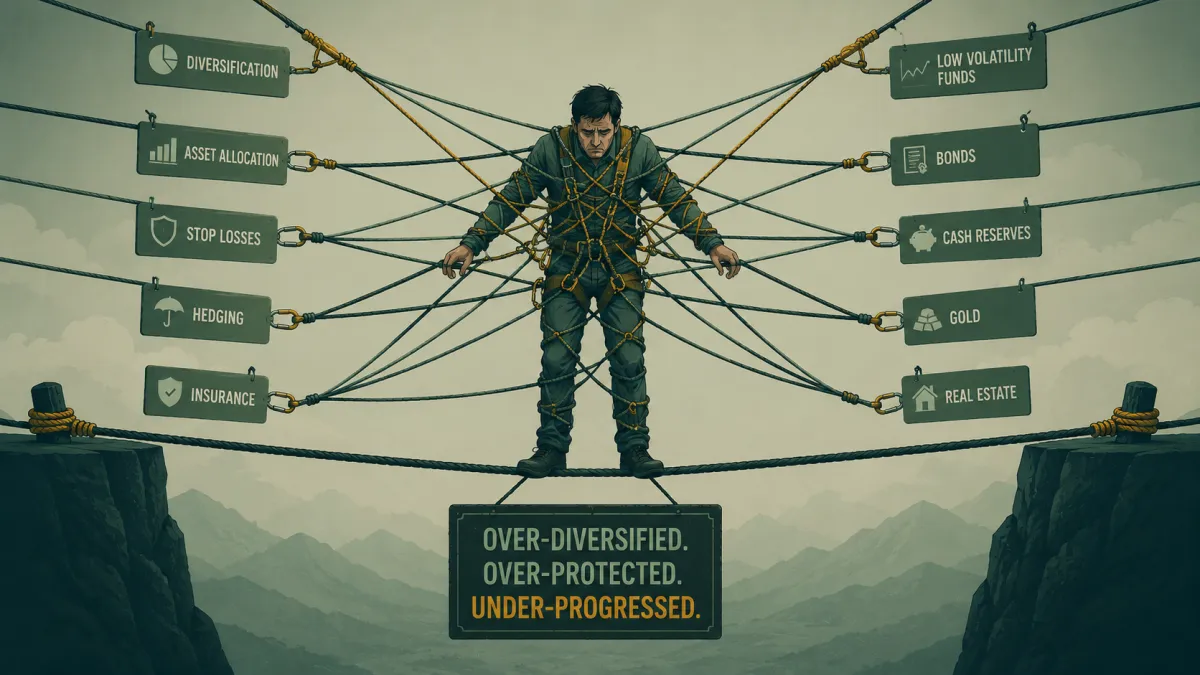
Why Diversification Has Become a Financial Religion